
When a Heart Stops,
Every Second Matters.
Sudden Cardiac Arrest can strike anyone, anywhere, without warning. Recognizing the signs and knowing how to respond turns an everyday bystander into the most critical first link in the chain of survival.
An abrupt malfunction in the heart's electrical rhythm
Sudden Cardiac Arrest is an Electrical Emergency.
Sudden Cardiac Arrest occurs when the heart's electrical system unexpectedly malfunctions, causing the heart to stop beating effectively.
Cardiac Arrest and a Heart Attack Are Not the Same.
While both are life-threatening emergencies, they have fundamentally different causes and require distinct responses.
Sudden Cardiac Arrest
- What Happens: An electrical disturbance causes the heart to suddenly stop pumping blood.
- Consciousness: The person becomes unresponsive within seconds and collapses.
- Breathing: Normal breathing stops completely or turns into abnormal, agonal gasps.
- Primary Action: Call 911 immediately, start continuous CPR compressions, and use an AED.
Heart Attack
- What Happens: Blood flow through a blocked coronary artery is prevented from reaching part of the heart muscle.
- Consciousness: The person is typically awake, conscious, and aware of symptoms.
- Symptoms: Chest discomfort, pressure, shortness of breath, pain in the arm/neck/jaw, cold sweats, or nausea.
- Primary Action: Call 911 immediately; keep the person calm and seated while awaiting paramedics.
The Connection: A heart attack can damage heart tissue and occasionally trigger an electrical malfunction that leads to Sudden Cardiac Arrest, but they remain distinct medical conditions with different immediate needs.
Sudden Collapse. No Response. Not Breathing Normally.
For a lay bystander, identifying cardiac arrest does not require medical tools or checking for a pulse. Look for these three clear signs:
Sudden Collapse
The individual suddenly drops to the ground, slumps over, or falls without warning.
Unresponsive
The person does not respond, move, or speak when tapped on the shoulders or shouted to.
Abnormal Breathing
Breathing is absent, or the person is only making occasional gasping or snorting sounds (agonal breathing).
Action Rule: If you observe someone who has collapsed, is unresponsive, and is not breathing normally, assume it is Sudden Cardiac Arrest. Treat it as an immediate emergency: call 911 and begin CPR.
CALL. PUSH. SHOCK.™
When someone collapses, follow this simple 3-step sequence immediately to keep oxygen moving and restore heart rhythm:
Starting Hearts' signature framework for rapid emergency response.
CALL 911
Immediately call 911 or point directly to a specific person and say: “You, call 911 and get an AED.”Keep the dispatcher on speakerphone so emergency medical personnel are dispatched instantly.
PUSH HARD & FAST
Place your hands in the center of the chest and push hard and fast at a rate of 100 to 120 compressions per minute. Continuous chest compressions maintain vital blood flow to the brain and heart tissue.
SHOCK WITH AN AED
Open and power on the nearest Automated External Defibrillator (AED). Attach the pads as illustrated. The device will analyze the rhythm and instruct you to deliver a shock only if a shockable rhythm is detected.
CPR Buys Time Until More Help Arrives.
When the heart stops, blood ceases to circulate oxygen to the brain. Brain cells begin to suffer damage within a few short minutes.
Chest compressions act as a mechanical substitute for the heart. By pushing firmly on the chest, you pump residual oxygenated blood through the cardiovascular system, preserving vital brain and organ function until professional first responders and defibrillation can be administered.
“Immediate CPR can double or triple the chance of survival after cardiac arrest.”
Source: American Heart Association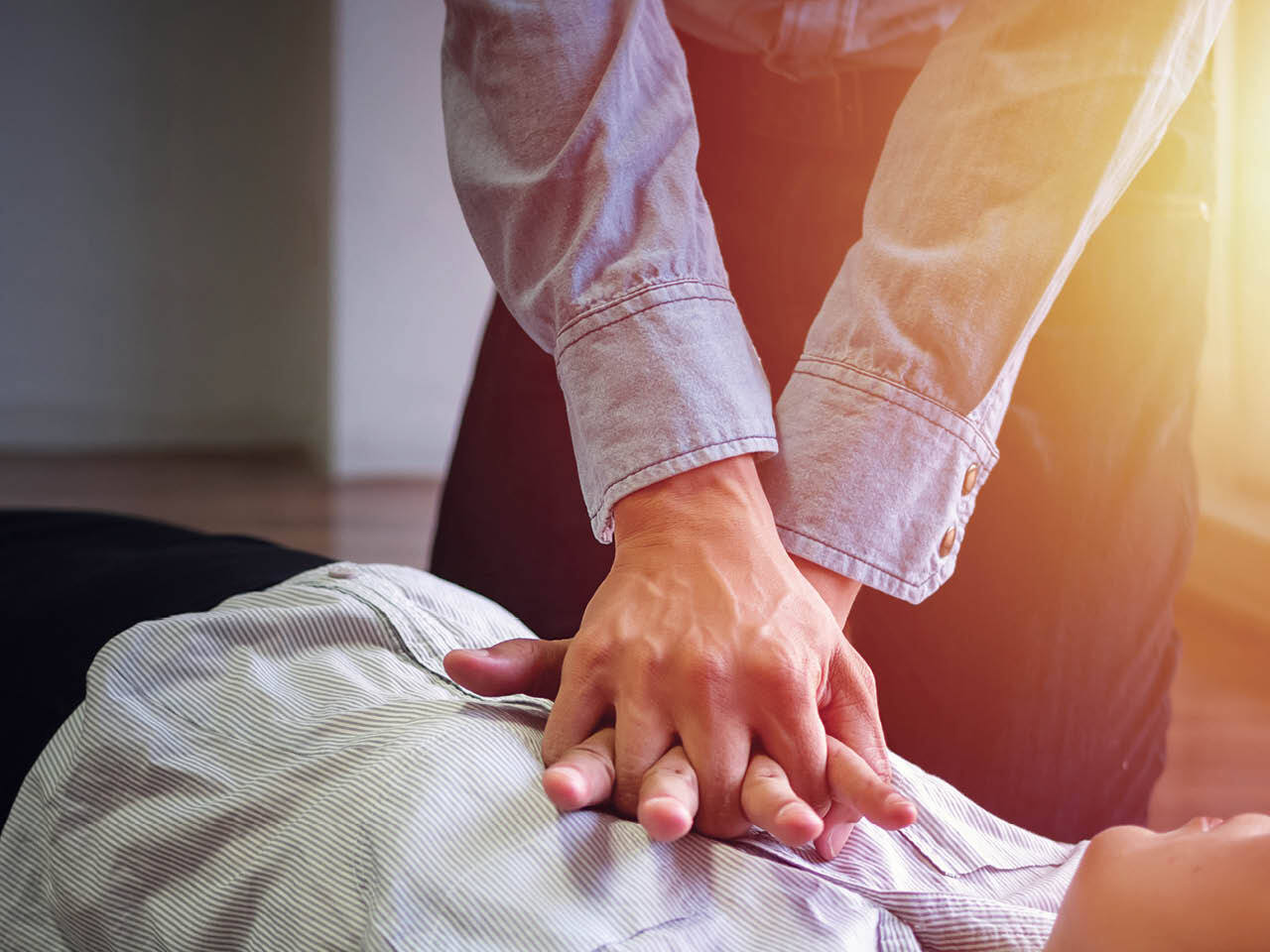
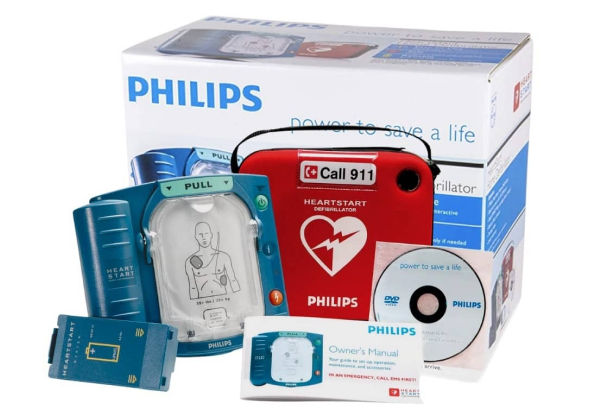
An AED is Designed to Tell You What to Do.
An Automated External Defibrillator (AED) is an intelligent, portable device designed so that anyone — regardless of medical background — can operate it safely in an emergency.
The First Responder May Be Someone Already in the Room.
Sudden Cardiac Arrest most often occurs outside of a hospital — in homes, workplaces, schools, athletic fields, and public gathering spaces.
When an arrest occurs, emergency medical services are on their way, but minutes matter. The people already present — family members, coworkers, teachers, teammates, and neighbors — are the true first responders. With basic training, you can step up with clarity and confidence when it matters most.

Don't Wait for an Emergency to Learn What to Do.
Cardiac arrest preparedness is a skill for everyone. Join our free Call.Push.Shock.™ classes or enroll in certified CPR and AED training to gain the confidence to save a life.
Educational Disclaimer: This page provides general educational information and is not a substitute for formal, certified CPR and AED training.